Guidance • SkySouth Aviation
First Time Flying Private?
A Complete Guide.
The Short Answer
Private aviation isn't just about luxury; it's about the reclamation of time. Arrive minutes before departure, bypass security queues, and fly directly to your destination on your schedule.
Flying private for the first time is one of those experiences that surprises almost everyone. You expect luxury. What you do not expect is just how different the entire process feels compared to commercial air travel, from the moment you pull into the parking lot to the moment a car meets you on the tarmac at your destination. No security theater. No cattle-call boarding. No middle seats. If you are flying private for the first time and want to know exactly what to expect, this is the guide you need.
At SkySouth Aviation, based at Burlington-Alamance Regional Airport in Burlington, NC, we have welcomed countless first-time private flyers. We know the questions you have, and we know the surprises that catch people off guard. This guide covers every step of the process, backed by real data, FAA regulations, and two decades of experience in private aviation.
First Time Flying Private? What to Expect: The Short Answer
You arrive 15 to 20 minutes before departure, not two hours early. You skip the TSA line entirely and walk through a quiet private terminal called an FBO (Fixed Base Operator). You meet your pilots, board your aircraft, and take off on your schedule. In the air, the cabin is yours, the catering is yours, and the conversation level is yours to control. On landing, your bags come off the plane directly and ground transportation is waiting. That is the short version.
Now, here is the longer version, with every step explained in detail.
The Private Aviation Market
Private flying is no longer only for the ultra-wealthy. The global private aircraft market was valued at approximately USD 26.6 billion in 2024 and is projected to reach USD 50.8 billion by 2034, growing at a compound annual growth rate of 6.7%, according to market research from Market.US.
A growing segment of first-time flyers are younger. According to data cited by Paramount Business Jets, 81% of affluent adults between 18 and 35 surveyed in 2025 work remotely, making flexible air travel far more practical and desirable than it was for previous generations.
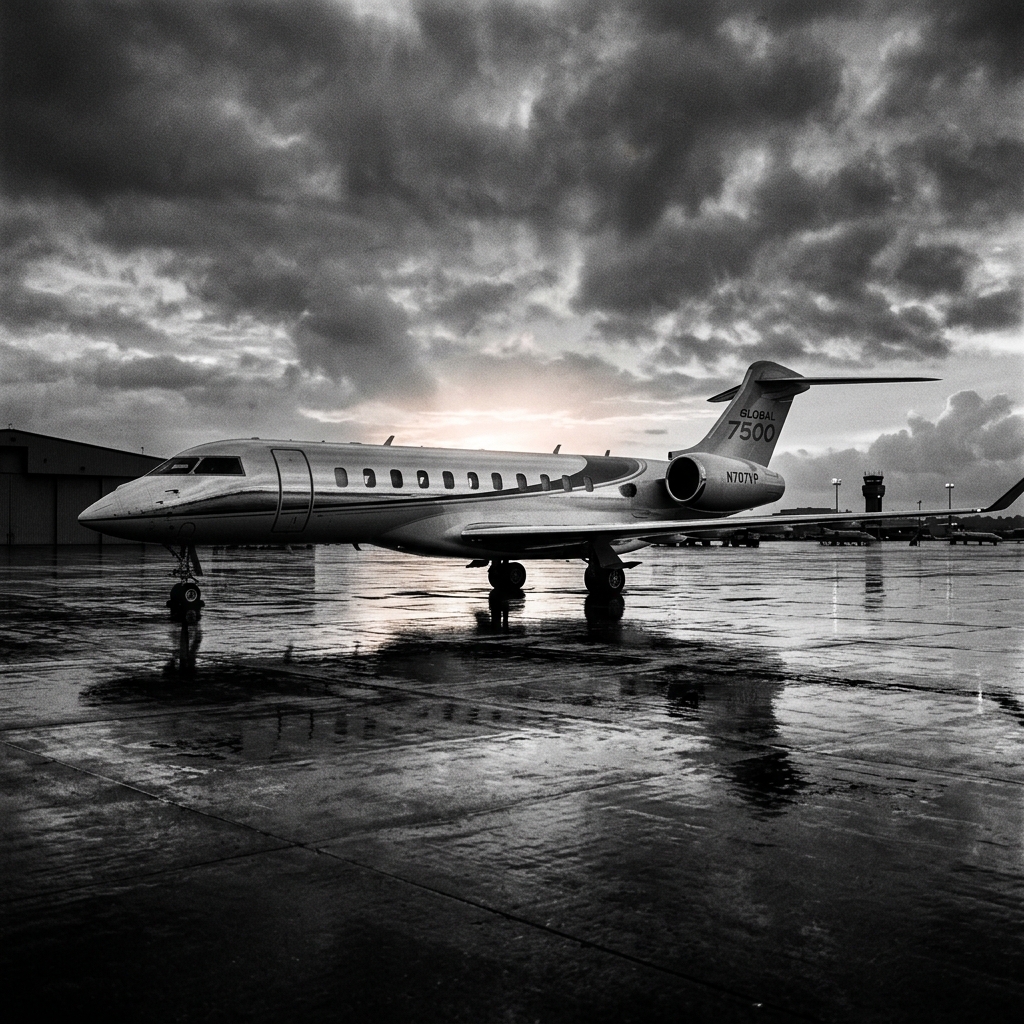
The broader business jet market was estimated at USD 72.15 billion in 2024 and is expected to reach USD 113.48 billion by 2030, per Grand View Research.
In Q1 of 2025 alone, WingX recorded 900,221 business jet departures globally, representing a 3% increase compared to Q1 2024. The United States leads global private aviation activity, accounting for roughly 69% of all outbound private flights, with California and Texas driving the most growth.
Put simply, private aviation has become more accessible, more competitive in pricing through fractional ownership and jet cards, and more relevant to a broader range of travelers. If you are flying private for the first time, you are part of a growing trend that shows no signs of slowing down.
Safety & Regulation
Understanding FAA Compliance
Charter flights like those operated by SkySouth are conducted under FAA Part 135, which governs commuter and on-demand air operations. These rules require a significantly higher standard of pilot training and certification than a private pilot flying friends in a personal aircraft.
PART 135
The gold standard for on-demand commercial operations. Charter pilots must hold a Commercial or Airline Transport Pilot certificate AND operate under a Part 119 certificate holder. Pilots are subject to random drug and alcohol testing. Aircraft must meet FAA maintenance standards specific to commercial charter operations.
PART 119
Governs the certification of air carriers and commercial operators. FAA inspectors perform more frequent checks on charter crews and aircraft than on private pilot operations. Crew members must pass regular proficiency checks to maintain FAA certification.
The FAA makes a current list of certified charter operators available to the public. You can also verify any operator's Part 135 certification before you book.
Security Without Friction
The TSA has a separate security framework for private charter operations. Under the TSA's Private Charter Standard Security Program (PCSSP), larger charter aircraft must screen passengers and their accessible property. For smaller charter aircraft like those operated by SkySouth, the security process is streamlined but still thorough: you will present a valid government-issued ID and your bags will be briefly checked.
This is not a loophole. The TSA's General Aviation security framework, which you can review at tsa.gov/for-industry/general-aviation, is designed proportionally to the risk profile of different types of operations.
"Safety is not an amenity; it is the foundation of every flight we manifest."
Definitions
What is an FBO?
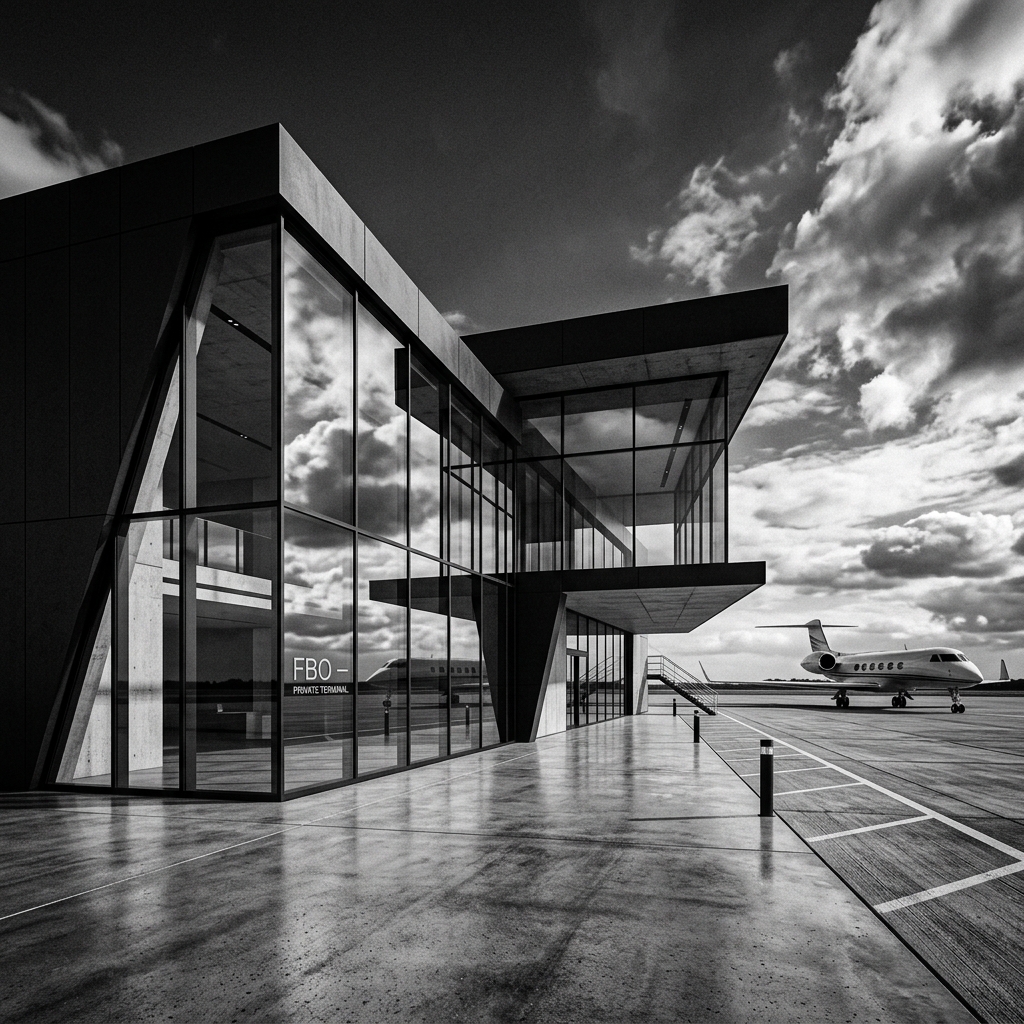
The Fixed Base Operator is your private gateway. The FAA defines an FBO as a commercial entity providing aeronautical services to the public at a public-use airport.
- More than 3,000 independent FBOs across the United States.
- Access to over 5,000 airports vs. roughly 500 commercial.
- Boarding typically takes under 20 minutes.
- Zero queues, zero wait times, zero overhead bin scramble.
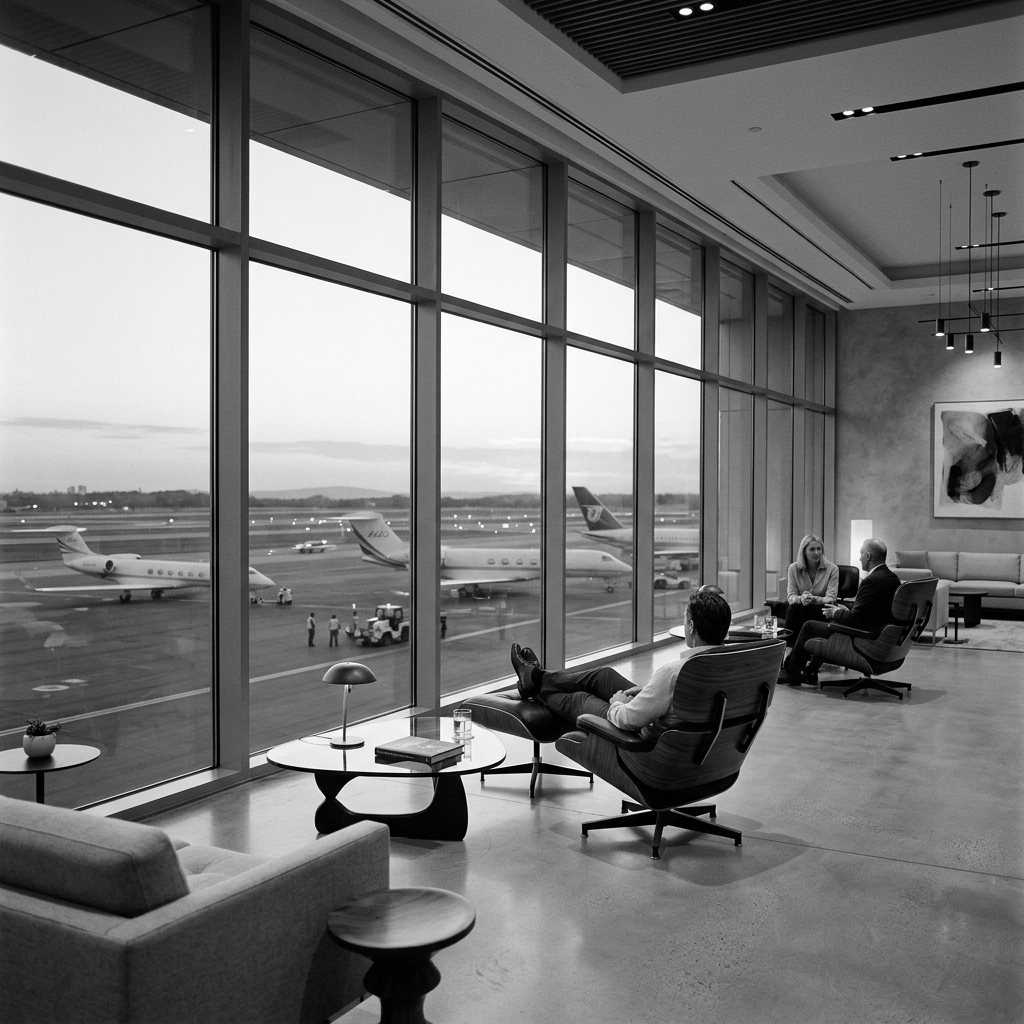
When you arrive at the FBO, you will notice the difference immediately. The parking lot is steps from the entrance. The lounge is quiet, comfortable, and designed for a small number of travelers. Staff greet you by name. Your bags are handled for you. There is no public departure board, no PA system calling for standby passengers, and no chaotic scramble for overhead bin space.
At SkySouth's FBO at Burlington-Alamance Regional Airport, the experience is designed around exactly this kind of personal attention. Our team handles your arrival, ground logistics, and departure so that your focus stays on where you are going, not on how you are getting there.
The Protocol: Your Pre-Flight Journey
Booking
Contact a charter operator directly. Share trip details: departure, destination, dates, passengers, and special requests.
The Manifest
Full legal names of all passengers collected. Valid government ID for domestic, passport for international.
Catering
Dietary preferences, favorite snacks, preferred drinks, cabin temperature, lighting — all personalized.
Arrival
Arrive at the FBO 15-20 minutes before departure. Show ID, bags briefly screened. Done in minutes.
Departure
Walk from lounge to aircraft. Meet your pilots face to face. Bags loaded in your presence. Wheels up.
Booking Your Charter: Costs and Options
You contact a charter operator directly or through a broker. You share your trip details: departure city, destination, dates, number of passengers, and any special requests like catering or specific luggage. The operator provides a quote based on aircraft type, routing, and availability.
For reference, costs vary widely by aircraft:
- Light jets (like the Cessna Citation CJ1 or CJ3): roughly $2,900 to $4,500 per flight hour
- Midsize jets: $4,000 to $6,000 per hour
- Large and ultra-long-range jets: $8,000 to $20,000 per hour
Additional costs can include landing fees, positioning fees if the aircraft needs to reposition to your departure airport, catering, and ground transportation. A good operator will walk you through all of this before you confirm.
If you plan to fly frequently, jet card programs and fractional ownership are worth exploring. Jet cards give you pre-paid hours at fixed rates. Fractional ownership means you own a share of an aircraft and pay for your share of operating costs. Both options give you guaranteed availability and consistent pricing.
The Passenger Manifest
Unlike commercial airlines, private charter operators collect detailed passenger information in advance. You will need to provide the full legal names of all passengers, matching their identification. For domestic flights, a valid government-issued ID is required. For international flights, a valid passport is mandatory. Your operator handles customs clearance, visa documentation, and any other paperwork on your behalf.
If you are traveling with pets, notify your operator during booking. Most charter flights are pet-friendly, with animals riding in the cabin rather than cargo. Some operators may charge a cleaning fee and may require documentation for international travel. If you have golf clubs, skis, oversized equipment, or unusual luggage, flag it at booking so the operator can confirm the aircraft's storage capacity.
Catering and Cabin Preferences
One of the genuinely surprising things about flying private is how personal the catering can be. Before your flight, you will typically be asked about dietary preferences, favorite snacks, preferred drinks, and any specific meal requests. This is not a menu you circle on a card; it is a conversation. Whether you want a plant-based spread, a charcuterie board, a case of a specific sparkling water, or a full hot meal, the crew will have it ready before you board.
You can also request cabin preferences in advance: preferred temperature, lighting, music playlists, or whether you want the flight to feel more like a working environment or a relaxed lounge.
Arrival at the FBO: What to Actually Expect
When to Arrive
For domestic flights, arriving 15 to 30 minutes before departure is standard. Some operators suggest 10 to 20 minutes for very short, local flights. This is a dramatic contrast to the commercial requirement of arriving 90 minutes to 2 hours early for domestic and 3 hours for international.
For international flights, plan for a bit more time, as customs documentation and any pre-departure checks will take slightly longer. Your operator will give you specific guidance.
What the FBO Looks Like
Most FBOs offer a comfortable lounge with seating, free WiFi, beverages, and sometimes light snacks or full catering for departing passengers. Larger or premium FBOs offer private meeting rooms, shower facilities, concierge services, valet parking, and sometimes even spa services. At smaller regional airports, the setup is more intimate but still private and efficient.
The FBO at Burlington-Alamance Regional Airport serves SkySouth's charter clients with a full-service terminal including jet fuel, ground handling, hangar services, and the personalized attention that makes the departure experience feel genuinely different from a commercial airport.
Security at the FBO
Security at the FBO is real but fast. You will show your ID, and your bags may be briefly screened. The whole process takes a matter of minutes. There are no public checkpoint lanes, no body scanners you have to queue for, and no liquids rule in most private charter contexts. If you are traveling to a high-security area or there is a special event TFR (Temporary Flight Restriction) at your departure airport, TSA may have a presence, but even then the process moves quickly because the number of passengers is small and your identity is already verified on the manifest.
Meeting Your Pilots and Boarding
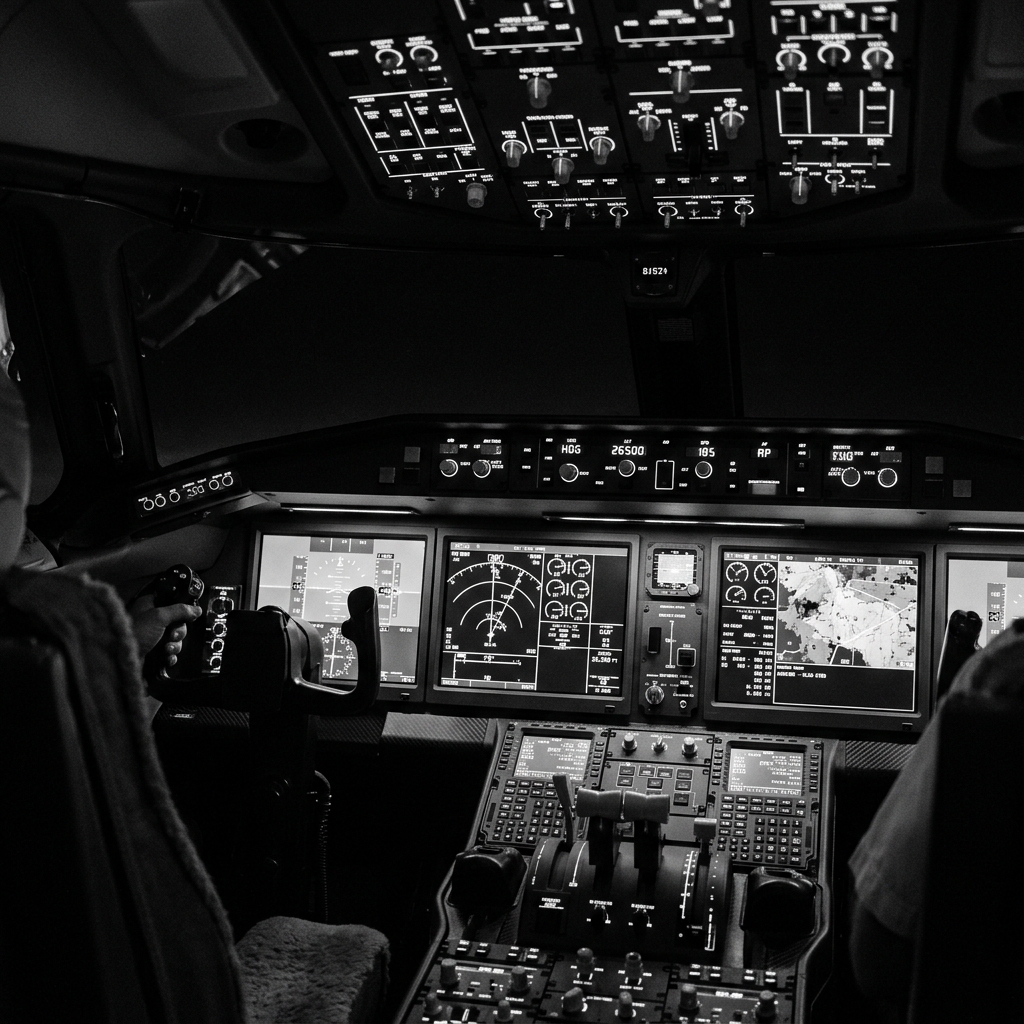
One of the things that surprises first-time private flyers most is meeting the pilots face to face before the flight. On a commercial airline, the flight deck might as well be on another planet. On a private charter, you will typically be introduced to your captain in the lounge or at the aircraft. You can ask questions, discuss the route, or simply shake hands and head to your seat.
SkySouth's pilots bring thousands of hours of flight experience. Founder Kevin Mock has over 30 years and more than 8,000 hours across aircraft including the C-130, T-38, Baron, and several Cessna Citation jets. That depth of experience is common among operators who take their Part 135 obligations seriously.
Boarding is direct. You walk from the lounge to the aircraft, either on foot across a short tarmac or via a dedicated vehicle. Your bags are loaded in your presence. There is no baggage check counter, no ticket scan, no gate agent, and no boarding group announcement.
The Fleet
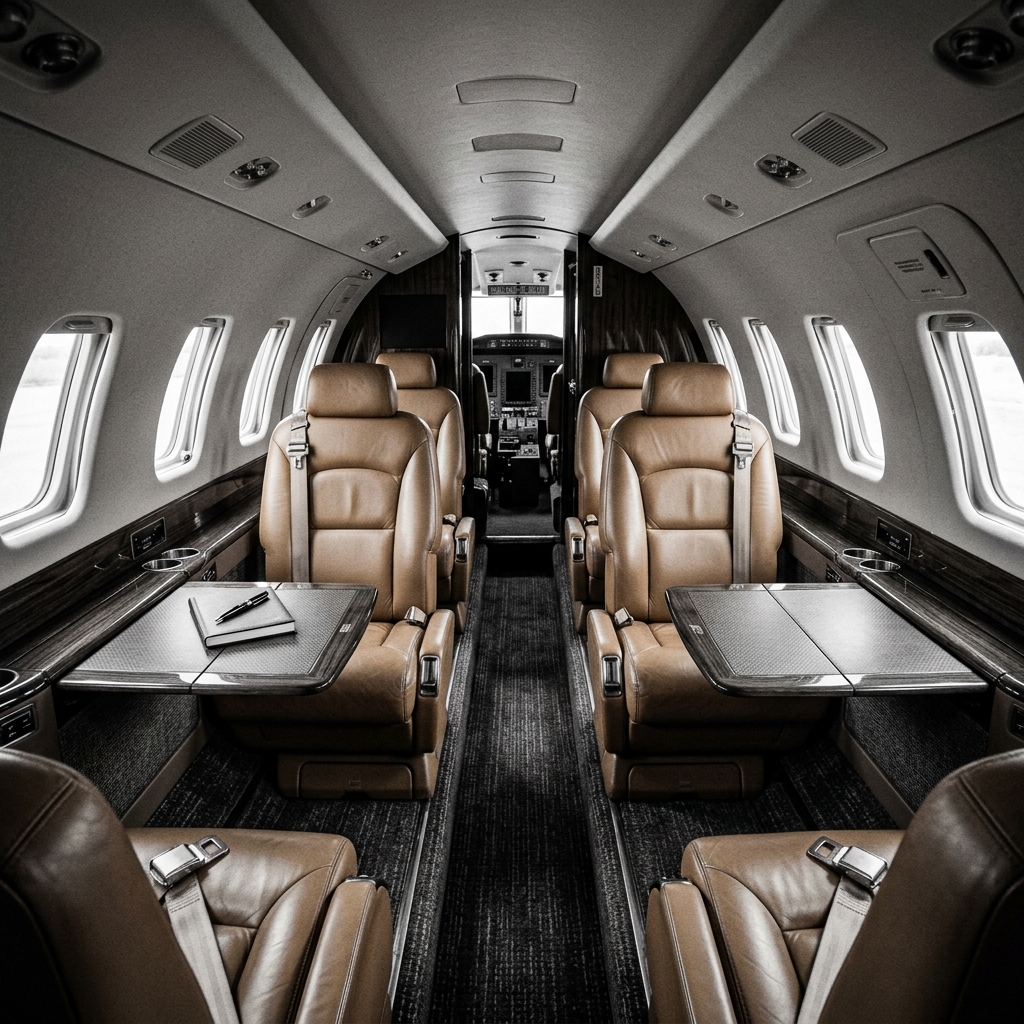
The Precision of the Cabin
From the nimble Citation CJ1 to the versatile CJ3, our cabins are designed for quietude and productivity.
Cessna Citation CJ1
Up to 5
1,100 nm
Cessna Citation CJ3
Up to 7
1,875 nm
Cabin Layout and Comfort
Private jet cabins are not one-size-fits-all. The experience depends significantly on the aircraft category you are flying. Here is a practical breakdown:
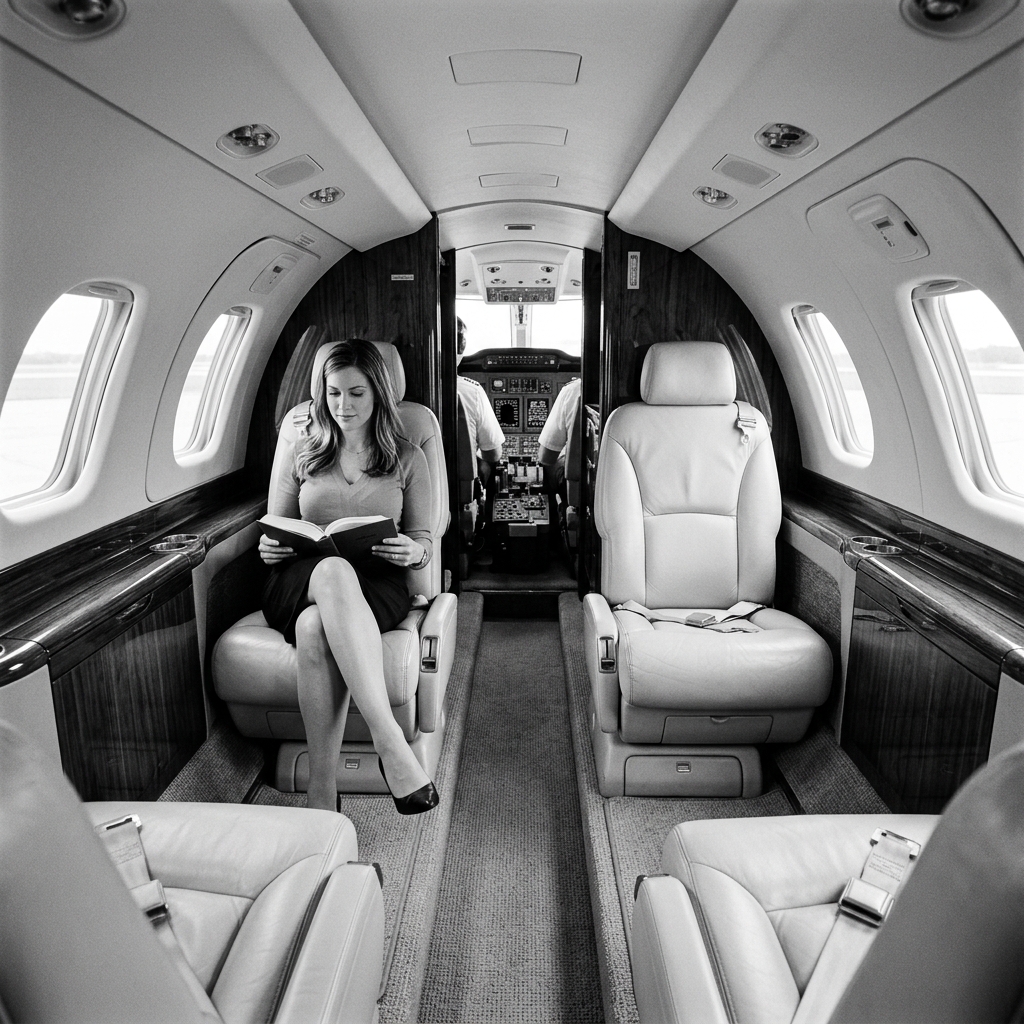
- Very light jets and light jets (like the Cessna Citation CJ1 and CJ3): 4 to 7 passengers, quiet pressurized cabins, leather seating, small refreshment areas, compact lavatories. Ideal for regional and mid-range flights.
- Midsize jets: 6 to 9 passengers, full stand-up cabins in most cases, more luggage space, stronger WiFi, more catering flexibility.
- Super-midsize and large jets: Full galley, multiple seating zones, lie-flat beds in some configurations, conference tables, and dedicated sleeping areas on ultra-long-range models.
Even on a light jet, the difference from a commercial economy or even business class seat is immediately apparent. There is no one behind you reclined into your knees. There is no middle seat. The cabin temperature is yours to adjust. The noise level is dramatically lower. You can have a normal conversation at cruise altitude without raising your voice.
Turbulence on Smaller Aircraft
One thing worth setting expectations on: smaller jets like a light jet or turboprop are more sensitive to turbulence than a large commercial aircraft. If you fly a light jet through weather, you will feel it more than you would on a 737. Your pilots will route around weather whenever possible, and they will communicate with you about what to expect. This is not a safety concern, just a comfort difference to be aware of.
WiFi, Entertainment, and Connectivity
WiFi is available on most private jets, though coverage varies by aircraft and route. On many jets, speeds are fast enough for video calls, streaming, and normal work. Some aircraft have dedicated in-flight entertainment systems. On others, the setup is more minimal. If connectivity matters for your trip, ask your operator what is available on your specific aircraft before you book.
There are no overhead PA announcements, no seatbelt signs flashing every 15 minutes, and no flight attendant pushing a cart down the aisle. The cabin is quiet. You can work, sleep, have a conversation, or stare out the window at 40,000 feet without interruption.
Baggage: No Carousels, No Delays, No Surprises
One of the genuinely liberating parts of flying private is how baggage works. You pack what you need, your bags are loaded onto the aircraft in your presence before departure, and they come off the aircraft at your destination and go directly into your car or ground vehicle. There is no baggage claim carousel. There is no delayed luggage. There is no weight limit by ticket class.
Luggage capacity does depend on the aircraft. Light jets typically accommodate the equivalent of 5 to 6 carry-on bags in total. Midsize and large jets have dedicated baggage compartments that can handle multiple full-size suitcases. If you are traveling with unusual or oversized items like golf clubs, fishing equipment, bicycles, or instruments, tell your operator in advance so the right aircraft is confirmed for your load.
Arrival: The Final Stretch
Landing at your destination on a private charter is the final confirmation that this is a different kind of travel. You do not pull up to a gate with 200 other people. The aircraft parks, the door opens, and your ground transportation is waiting at the tarmac or at the FBO exit. Your bags are unloaded directly to your vehicle. If you had a meeting two hours after departure, you walk off the plane ready to be there.
For international arrivals, customs and immigration are handled at the FBO level at most major destinations. Many FBOs have on-site customs facilities. At some destinations, a customs officer will come to the aircraft. Either way, the process is handled discreetly and efficiently by your operator, without public queues.
If your plans change after landing, call your operator. A good charter company, including SkySouth, handles scheduling adjustments, return flight changes, and alternate airport requests with the same attention they gave your original booking.
Beyond First Class
A study in logistical superiority.
Commercial First Class
- Airport Arrival 120 min prior
- Security Public TSA Lines
- Departure Time Fixed Schedule
- Destination Major Hubs Only
- Cabin Privacy Shared Cabin
- Cost (per person) $1,500–$3,000
SkySouth Private
- Airport Arrival 15 min prior
- Security Private Verification
- Departure Time On-Demand
- Destination 5,000+ Regional Airports
- Cabin Privacy Exclusively Yours
- Cost (per group) $2,900–$4,500/hr
On commercial first class, you get a good seat, better meals, priority boarding, and sometimes a lie-flat bed on long-haul routes. But you are still on the airline's schedule. You are still in a shared cabin with potentially dozens of other passengers. You are still subject to gate changes, delays, and TSA security. You still arrive at a major hub, not necessarily the airport closest to your destination.
With private charter, you control the departure time, the departure airport, the passenger list, the cabin environment, and the catering. You access a network of over 5,000 airports in the US compared to roughly 500 commercial airports. You arrive closer to your final destination. Your total travel time, including ground transportation, is often shorter even on routes where the commercial flight itself is faster.
The cost difference is real. Private charter starts at around $2,900 to $4,500 per flight hour for a light jet. A commercial first-class seat on a busy route can run $1,500 to $3,000 for a one-way ticket, per person. For a group of four or five travelers, the math on private charter becomes far more competitive, and you gain the scheduling and privacy advantages in the process.
Etiquette and Practical Tips for Your First Private Flight
What to Wear
There is no formal dress code on private charter flights, but the environment tends toward smart casual. Business travelers often opt for a clean, professional look. Leisure travelers wear what is comfortable. Athleisure has become increasingly common, especially among younger travelers. What you wear is genuinely your choice, which is part of the point.
Tipping
Tipping crew members is not required but is a common courtesy if the service was exceptional. A standard gesture is anywhere from $20 to $100 per crew member depending on the length of the flight and level of service. For shorter regional flights, a simple thank-you goes a long way. Ask your operator or the concierge team if you are unsure about standard practice on a specific route.
Interacting with the Crew
Pilots on private flights are more accessible than on commercial aircraft, but their first priority is always safety and operations. Wait until the aircraft reaches cruising altitude before initiating extended conversations with pilots. Cabin crew are there to assist with comfort and safety; treat them with the same respect you would any professional service provider.
Confirm Ground Transportation in Advance
At some remote FBOs, rideshare services are not available or have very limited coverage. Confirm your ground transportation at the destination before you depart. Your operator's concierge team can arrange a car service, rental vehicle, or helicopter connection on your behalf. This is especially important for regional airports in rural areas.
Pre-Download Entertainment
WiFi on private jets is generally reliable, but coverage can be limited over some remote routes or at certain altitudes. If you plan to stream movies, download content before you board. This is good practice regardless of the WiFi quality on your specific aircraft.
Access to Airports You Cannot Reach by Commercial Airline
This is one of the most practical advantages of private aviation and one that first-time flyers often underestimate. Commercial airlines serve approximately 500 airports in the United States. Private aviation, through the FBO network, gives you access to more than 5,000 airports across the country.
That means you can fly into regional airports that are 15 minutes from your final destination rather than a major hub that requires two hours of ground travel. It means reaching mountain resorts, coastal communities, private islands, and industrial facilities in smaller cities that have no commercial air service. For business travelers who need to cover multiple secondary markets in a single day, this access is not a luxury feature. It is a practical necessity.
SkySouth connects Burlington, NC and the greater Piedmont Triad area to more than 500 private and municipal airports across the US, Canada, and the Caribbean. For travelers in central North Carolina, that includes avoiding the congestion of RDU and PTI while gaining faster, more direct routing to destinations across the East Coast.
How to Verify Your Charter Operator Before You Fly
The FAA strongly advises passengers to verify the legitimacy of any charter operator before booking. The FAA maintains a current list of FAA-certificated air carriers and operators that is publicly accessible. Here are the steps every first-time private flyer should take:
- Confirm the operator holds a Part 119 certificate and conducts flights under Part 135 regulations.
- Ask specifically whether your flight will be conducted by the certificate holder's own crew and aircraft, or by a third-party sub-charter.
- Look for third-party safety ratings such as ARGUS Platinum, ARGUS Gold, or Wyvern Wingman. These represent independent audits of operational safety practices.
- Ask about the pilot's total flight hours and specific experience in the aircraft you are flying.
- Be skeptical of unusually low pricing. Legitimate Part 135 operators carry significant overhead from maintenance, training, and compliance.
The FAA's Safe Air Charter Operations page provides detailed guidance on how to identify illegal charter operations and what red flags to watch for, including operators who coach passengers on what to say if an FAA inspector asks questions.
SkySouth Aviation: First-Time Flyers Welcome at Burlington-Alamance
SkySouth Aviation has operated out of Burlington-Alamance Regional Airport since 2003. Founded by Kevin Mock, a veteran pilot with over 30 years of experience and more than 8,000 flight hours in aircraft ranging from military C-130s to Cessna Citation jets, SkySouth has built a reputation for reliability, safety, and personal service across central North Carolina.
Our fleet includes the Cessna Citation CJ1 and CJ3, both modern light jets maintained under FAA Part 135 regulations with experienced two-pilot crews on every charter flight. The CJ1 seats 4 to 5 passengers and is ideal for regional trips. The CJ3 seats 6 to 8 passengers with greater range and cabin space for longer routes.
From Burlington, we fly direct to more than 500 airports across the US, Canada, and the Caribbean. Popular routes include New York City (Teterboro or Westchester), Washington D.C., Atlanta, Miami, Boston, and Charlotte. For Greensboro, Durham, Chapel Hill, and Raleigh-area travelers, Burlington-Alamance is 25 minutes off I-40 and offers everything a major airport does, without the crowds, congestion, or commercial airline headaches.
Our FBO provides full-service ground handling, Jet A and AvGas fueling, hangar rentals, and personalized concierge service for departing and arriving passengers. We handle the logistics. You focus on the trip.
Frequently Asked Questions
Do I still need ID when flying private?
Yes. A valid government-issued ID is required for domestic flights. A valid passport is required for international travel. Your operator collects this information during booking and verifies it before departure. The process is quick and handled at the FBO, not at a public checkpoint.
Can I bring my pet?
Most private charter flights are pet-friendly, with animals riding in the cabin alongside you rather than in cargo. Notify your operator at booking. Some operators charge a cleaning fee. For international travel, proper documentation and a pet passport may be required depending on the destination.
What happens if I need to change my plans last minute?
Private charter is built around flexibility. Most operators can accommodate same-day schedule changes, alternate airports, and return trip adjustments depending on aircraft availability. SkySouth's charter dispatch team is available 24 hours a day, seven days a week to handle changes.
How much luggage can I bring?
Luggage capacity depends on the aircraft. Light jets like the CJ1 and CJ3 accommodate the equivalent of 5 to 6 carry-on bags. Midsize and large jets handle multiple full-size suitcases. For unusual items like sports equipment or oversized gear, tell your operator at booking so the right aircraft is confirmed.
Is private flying safe?
Yes. FAA Part 135 charter operations are subject to strict safety regulations, frequent inspections, mandatory proficiency checks for pilots, and higher certification requirements than private pilot operations. You can verify any operator's certification through the FAA's certified operator listings. At SkySouth, every flight is conducted under Part 135 with experienced, proficiency-checked pilots and regularly maintained aircraft.
Final Thoughts
Flying private for the first time changes something in how you think about air travel. Not because of the leather seats or the catering, though both are genuine upgrades. It changes because you realize how much of what you accepted as normal about flying was never about getting you from A to B efficiently. It was about managing enormous volumes of people through a constrained system.
Private charter removes you from that system entirely. Your schedule, your cabin, your route, your departure airport. The first time you walk off a flight onto a tarmac and directly into a waiting car, you understand why people who fly private rarely want to go back.
I recommend SkySouth to anyone in central North Carolina who is considering their first private flight. The team is experienced, the aircraft are modern and well-maintained, the pricing is transparent, and the level of personal service is exactly what flying private should feel like. Whether it is a business trip to New York or a long weekend in the Bahamas, the SkySouth experience is a strong introduction to what private aviation actually offers.
To book a charter or request a quote, visit skysouth.com or contact our team directly. Burlington-Alamance Regional Airport is your gateway to private air travel across the eastern United States and beyond.